
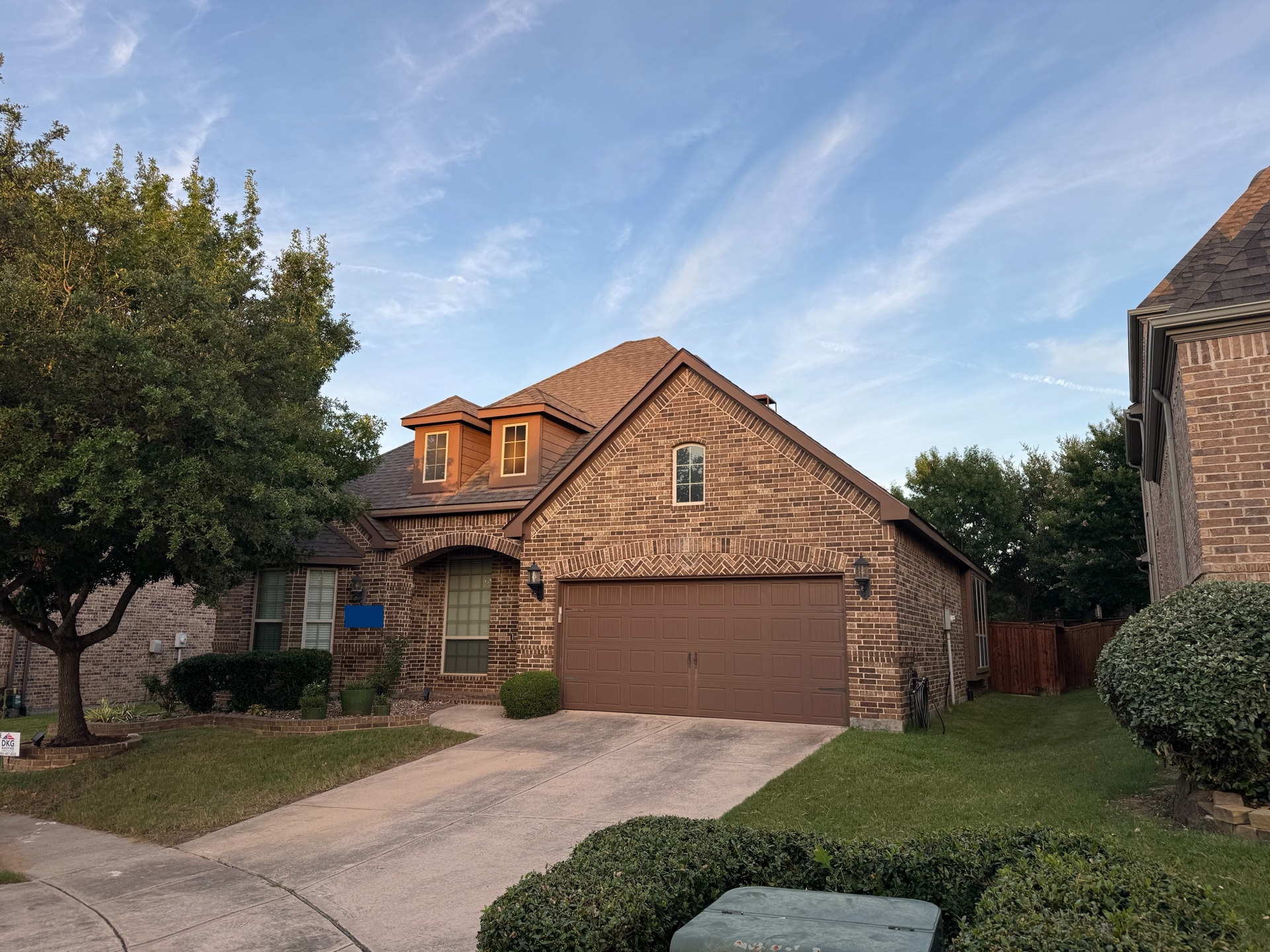
In North Texas, hail isn't a matter of 'if,' but 'when.' From small pea-sized stones to baseball-sized monsters, Denton County residents see some of the most volatile weather in the country. While large hail makes its presence known immediately, smaller stones can cause subtle damage that compromises your home's integrity over time without ever causing a visible hole.
At DKG Roofing, we roof North Texas homes, helping neighbors navigate the aftermath of DFW storms. Identifying hail damage early is the difference between a simple insurance claim and paying for a full interior renovation after a ceiling collapse. Understanding what to look for—and where to look—is the first step in protecting your investment.
Direct Signs of Shingle Damage
When hail hits a composition shingle, it creates a 'bruise.' While it might just look like a dark spot to the untrained eye, that impact has actually knocked away the protective granules and potentially fractured the fiberglass matting. Once that matting is broken, water can seep through the shingle even if there isn't a gaping hole.
In Denton and across the DFW Metroplex, our high heat accelerates this damage. Once the granules are gone, the Texas sun bakes the exposed asphalt, causing it to become brittle and crack within months. This is why a roof that survived a spring storm might suddenly start leaking during a fall rainstorm.
- Dented or 'pock-marked' copper or aluminum gutters. High-impact hail often leaves round indentations in the metal.
- Splattered lead jacks. The soft lead flashings around plumbing vents are easily deformed by ice stones.
- Bruised shingles. If you touch a dark spot on a shingle and it feels soft or spongy like a bruised apple, the fiberglass mat underneath is likely fractured.
- Circular cracks. Large hail can create a 'crescent moon' shape in the shingle surface.
- Missing granules. If you see bald spots on your shingles where the black substrate is exposed, the protective outer layer has been knocked away.
Checking the 'Soft' Metals and Surrounding Property
Often, the best evidence of roof damage isn't on the roof itself but on the softer materials around your home. Metal vents, valleys, and gutters are excellent 'detectives' for hail activity because they don't have the granular texture of shingles to hide the impact.
Check your downspouts and the metal 'collars' around your roof pipes. If these are covered in small dings, it is almost certain that your shingles took a beating as well. We recommend clients look at their mailboxes and fence lines as well; if the wood is chipped or the metal is dented, it’s time to call for a professional roof inspection.
- Dented window screens or fractured window glass.
- Dings in garage doors or metal siding.
- Chipped paint on decks or fences.
- Dented 'fins' on your exterior air conditioning unit. High-velocity hail will flatten the thin metal grills on your HVAC system.
The Dangers of Granule Loss
One of the most overlooked aspects of hail damage is the loss of granules. These small, stone-like particles are the primary defense against UV radiation and fire. After a hail storm, check your gutter downspouts. If you see piles of what looks like heavy sand or gravel, your shingles have likely been 'stripped' by the ice stones.
A roof with significant granule loss is a failing roof. Even if it stays watertight for another year, the lack of UV protection will cause the shingles to curl and shrink prematurely. As a veteran-owned business, we believe in giving you the straight truth: ignoring granule loss now often leads to a much more expensive roof replacement later out of your own pocket once the insurance window has closed.
Why Timing Matters in North Texas
Insurance companies in Texas typically have a statute of limitations for filing a hail claim. If you wait until the roof starts leaking into your living room, you may find that the 'date of loss' was too long ago for the insurance company to cover the repair. Furthermore, subsequent storms can 'wash away' the evidence of the initial hail impact, making it harder for an adjuster to verify the damage.
Regardless of whether you see water dripping from your ceiling, if you have experienced a storm with hail larger than 1 inch in diameter, you should have a professional assessment. Local contractors who know Denton County weather understand how to document these losses correctly to ensure your home is restored to its pre-storm condition.