Replacing your roof is a significant investment, and once the shingles are installed, you will likely be living with that color choice for the next 20 to 30 years. While the primary job of your roof is to protect your home from the volatile North Texas weather, the aesthetic impact cannot be ignored. The right color can enhance your home's architecture and even increase its resale value.
At DKG Roofing, we roof North Texas homes, helping homeowners in Denton County navigate these decisions. Picking a color isn't just about what looks good on a small sample board; it is about how the material interacts with your siding, your neighborhood's style, and the intense Texas sun.
Consider the Architecture and Existing Materials
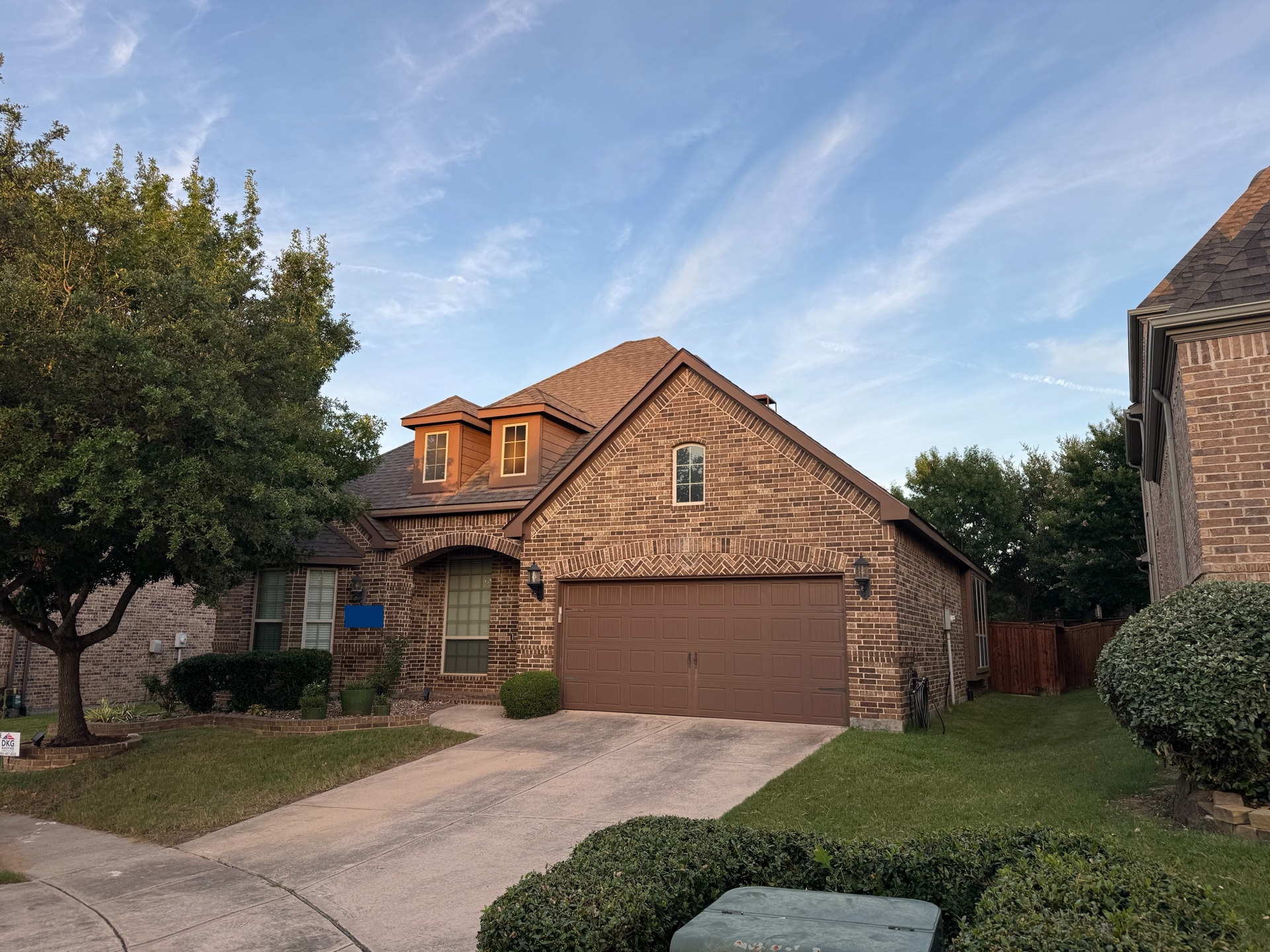
Before looking at shingle booklets, look at the fixed elements of your home that aren't changing. This includes your brickwork, stone accents, and the color of your siding. Your roof should complement these tones rather than compete with them. For example, if your home has 'cool' tones like gray or blue siding, a charcoal or slate-colored roof usually works best. If your home features 'warm' tones like cream, beige, or red brick, then browns, tans, or weathered wood shingles create a more cohesive look.
Keep in mind that high-contrast combinations often make a house stand out. A white house with a black or dark gray roof is a classic 'modern farmhouse' look that provides a sharp, clean aesthetic. Conversely, low-contrast combinations—like a tan house with a brown roof—can make a home appear larger and more understated.
The Impact of the North Texas Climate
In the DFW Metroplex, we deal with intense heat for several months of the year. The color of your roof can have a direct impact on your home's internal temperature. Darker colors absorb more heat, which is transferred into the attic space. While a well-ventilated attic can mitigate this, lighter colors like light grays or 'cool' rated shingles reflect more sunlight.
If you are concerned about cooling costs, you might consider shingles specifically designed with reflective granules. These are often required in certain commercial applications but are becoming more popular for residential roofing installations in Texas. However, for most homeowners, the difference in energy bills between a medium-gray and a dark-gray roof is minimal as long as the attic ventilation system is functioning correctly.
Viewing Samples in Physical Light
One of the biggest mistakes a homeowner can make is choosing a shingle color based on a photo in a brochure or a digital image on a screen. Digital colors are often distorted by screen settings, and professional photography is often color-corrected. Light also changes depending on the time of day and the direction your house faces.
Always ask your contractor for physical samples. Take these samples outside and lean them against your siding or brick. Look at them in the bright morning sun and again in the late afternoon shade. You will notice that a shingle that looks gray in the shade might look almost blue in direct sunlight, or a brown shingle might show reddish undertones when the sun hits it. At DKG Roofing, we encourage our clients to take their time with this step to ensure they are happy with the final result.
Quick Tips for Narrowing Your Selection
Narrowing down your choices can be overwhelming. As a veteran-owned business, we believe in providing straightforward advice to help our neighbors make the best decision for their property. If you are stuck between two colors, we often suggest looking at a 'Weathered Wood' blend. It is the most popular color in North Texas for a reason: it balances gray and brown tones, making it compatible with almost any exterior paint or brick color.
- Check your HOA guidelines first to see if specific color palettes are mandated.
- Look at neighboring houses; you want your home to be unique but not an eyesore that clashes with the street's aesthetic.
- Consider the 'blended' look of modern shingles. Most high-quality asphalt shingles use a mix of different colored granules to add depth and dimension.
- Remember that dark colors can make a roofline look smaller, while lighter colors can make a roof appear more prominent.