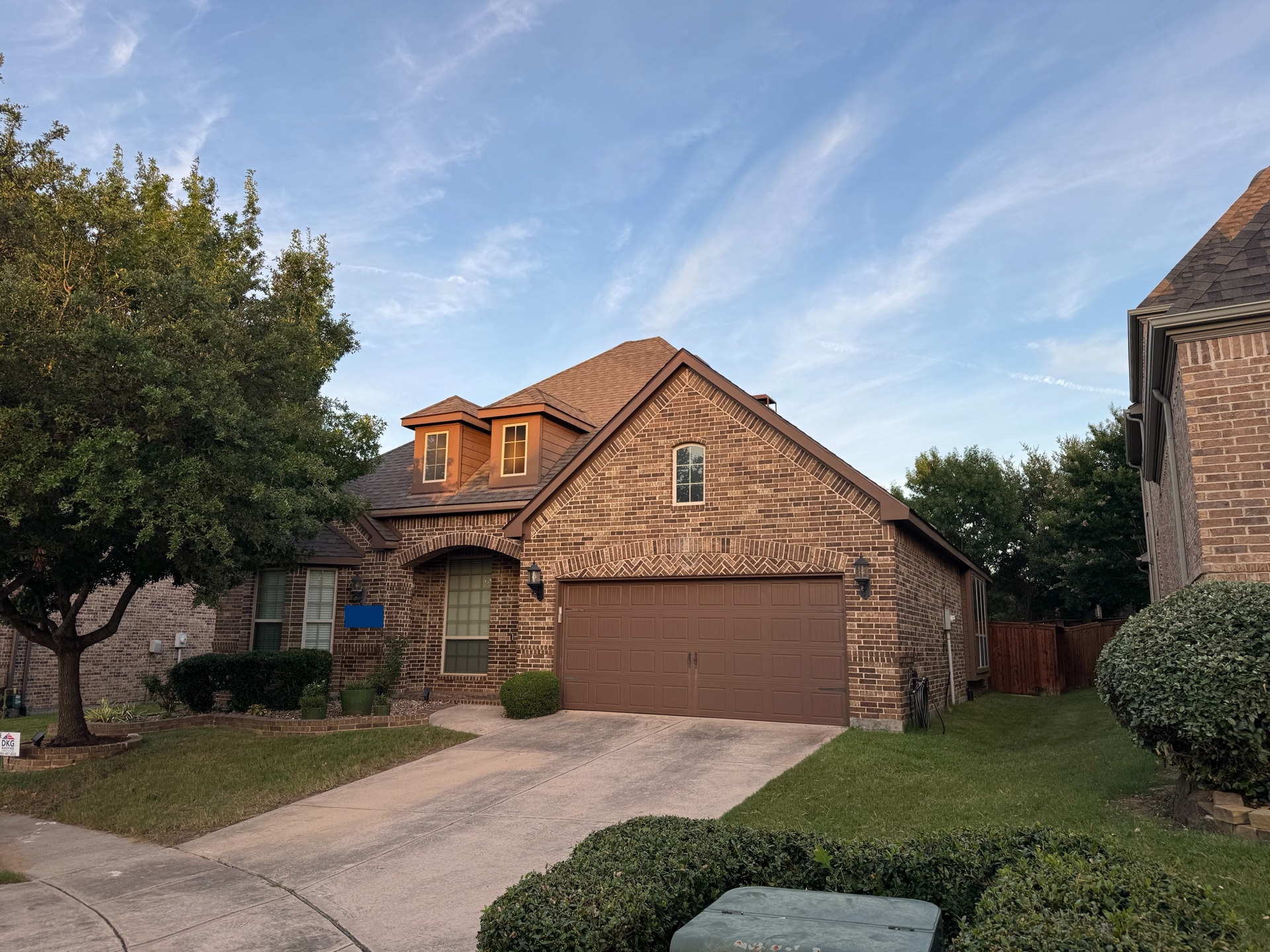
If you walk through any neighborhood in Denton County, you will see the gable roof more than almost any other style. Recognizable by its triangular shape, the gable roof has been a staple of American architecture for centuries. Its simplicity is its strength, offering a classic aesthetic that fits everything from traditional ranch homes to modern builds.
At DKG Roofing, we roof North Texas homes, working on these structures across the DFW Metroplex. While the design is straightforward, North Texas weather—ranging from triple-digit heat to high-speed wind and hail—demands that these roofs be built and maintained with precision. Understanding the mechanics of a gable roof is the first step in ensuring your home stays protected.
What Defines a Gable Roof?
A gable roof, also known as a pitched or peaked roof, consists of two sloping sides that meet at a top ridge. This creates an A-frame or triangular shape at each end, known as the 'gable.' This design is favored for its simplicity and the functionality it provides to the homeowner.
One of the biggest advantages of this style is the interior space it creates. Because of the steep pitch, gable roofs allow for vaulted ceilings or additional attic space. In a climate where ventilation is key to cooling your home, having that extra vertical space makes it easier to install effective insulation and airflow systems.
The Advantages of the Gable Design
The primary reason we see so many gable roofs in North Texas is their efficiency. They are designed to shed water and debris better than flatter designs. When we experience the sudden, heavy downpours common in the DFW area, you want a roof that moves water away from your foundation as fast as possible.
Furthermore, for property managers and homeowners looking at the bottom line, the gable roof offers excellent value. It requires fewer materials and less time to construct than multi-faceted roof lines. This simplicity also makes it easier to integrate skylights or dormers should you choose to upgrade your home's aesthetics or natural lighting.
- Water Shedding: The steep pitch allows rainwater to run off quickly, preventing the pooling that often leads to leaks.
- Cost-Effective: Because the design is less complex than a hip or gambrel roof, the labor and material costs for a roof installation are typically lower.
- Easier Maintenance: The straightforward design makes it easier for contractors to identify and repair issues before they become major problems.
Potential Risks in North Texas Weather
Despite their popularity, gable roofs do have vulnerabilities, particularly regarding wind. Because the gable ends are flat vertical surfaces, they can act like a sail during high-wind events. Without proper bracing, strong gusts can catch the "overhang" and cause significant damage or even uplift the roof structure in extreme cases. Where the framing behind a gable end has shifted or cracked, roof truss repair is the fix rather than another round of shingle patching.
At DKG Roofing, a veteran-owned company, we emphasize the importance of structural integrity during our roof inspections. We look for proper hurricane ties and bracing in the attic to ensure the roof is secured to the wall plates. For homes in open areas of Denton County where wind speeds are higher, these reinforcements are not just a recommendation; they are a necessity.
Maintenance Tips for Your Gable Roof
Maintenance is the key to longevity. In the DFW Metroplex, the intense UV rays can bake asphalt shingles, making them brittle over time. On a gable roof, this often shows up first on the south-facing slope. Regularly checking for granule loss or curling shingles can save you from an expensive roof repair down the road. The rake edges of a gable also depend on sound trim, so pair roof maintenance with soffit and fascia repair when the boards along the edge show rot or peeling paint.
Property managers should also pay close attention to the valleys (where two roof sections meet). Even though a standard gable is simple, many Texas homes use 'cross-gables' which create more valleys. These are high-traffic areas for water and are the most common spots for leaks to develop if flashing is not installed correctly.
- Regular Gutter Cleaning: Because water moves faster off a gable roof, your gutters must be clear to handle the volume.
- Check the Ridge Cap: The peak of the roof takes the brunt of the wind and sun. Ensure the ridge shingles are not cracked or missing.
- Siding Inspection: The 'gable' part of the wall (the triangle) is often covered in siding. Check for gaps where water could enter the attic space.
Frequently Asked Questions
Think your roof needs attention?
DKG Roofing serves North Texas with free roof inspections — a roof walk and verbal findings — written itemized quotes, and adjuster meetings when a claim is involved. Call (940) 497-2833 or request your free inspection online.
Veteran-Owned · Insured