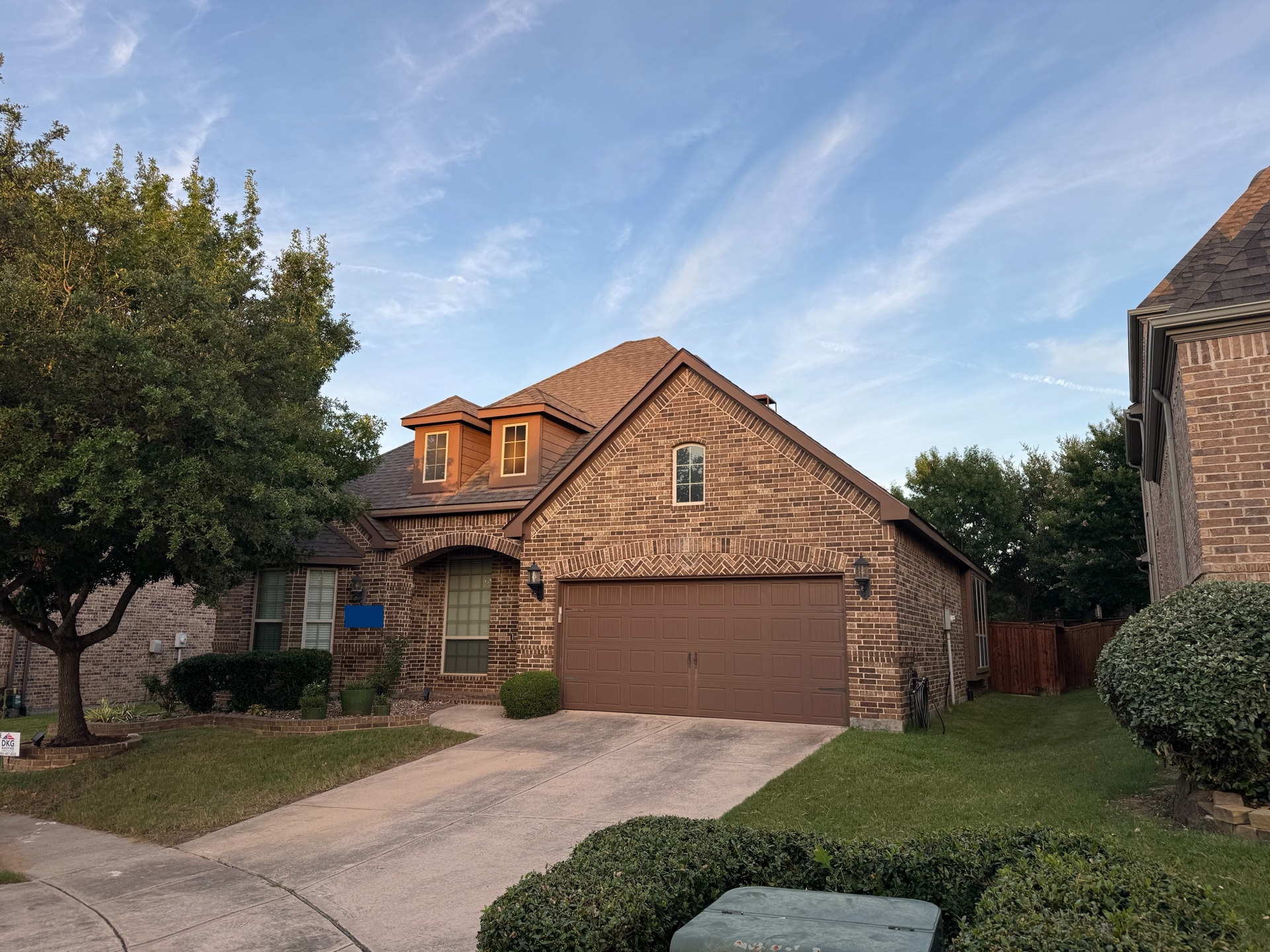
If you look around neighborhoods in Denton County, you will see a mix of roofing styles. While many newer homes use thick, textured shingles, the 3-tab shingle remains a staple in the industry. These shingles are the traditional choice for residential roofing, recognized by their flat, uniform appearance and rectangular shape.
Choosing the right material for your North Texas home involves balancing cost with performance. Roofing across the DFW Metroplex, we have seen how different materials hold up against our unique climate. Understanding the specifics of 3-tab shingles helps you decide if they are the right fit for your budget and your property's needs.
What Are 3-Tab Shingles?
3-tab shingles are a type of asphalt shingle made from a single layer of fiberglass mat coated with asphalt and ceramic-coated granules. They are called '3-tab' because each shingle strip has three distinct tabs or flaps. When installed, they create a repetitive, brick-like pattern on the roof.
Because they consist of a single layer, they are thinner and lighter than their architectural counterparts. This makes them easier and faster to install, which often translates to lower labor costs. For many rental properties or homes where the budget is the primary concern, 3-tab shingles offer a clean, professional look at the lowest price point available in the market.
- Uniform, flat appearance with distinct cutouts.
- Lightweight construction compared to laminate shingles.
- Most affordable asphalt roofing option.
- Class A fire rating for safety.
The Benefits of 3-Tab Asphalt Shingles
The primary advantage of 3-tab shingles is affordability. If you are preparing a home for sale or managing a budget-tight residential roofing project, 3-tab shingles allow you to get a new, functional roof without a massive upfront investment.
Beyond the price, these shingles are highly effective at shedding water and providing a basic level of protection against the elements. They are manufactured to be fire-resistant and are treated with granules that protect the underlying asphalt from UV degradation. For homeowners who prefer a traditional, flat look rather than the dimensional 'wood-shake' appearance of modern shingles, 3-tab remains the go-to aesthetic choice.
- Lower material and labor costs.
- Classic, clean aesthetic for traditional home designs.
- Easier to repair on a tab-by-tab basis.
- Widely available in various colors to match existing structures.
Considerations for North Texas Homeowners
While 3-tab shingles are cost-effective, they do come with trade-offs, especially in the DFW Metroplex. Our region is known for significant storm damage, including high-velocity winds and large hail. Because 3-tab shingles are thinner and lighter, they have a lower wind rating than architectural shingles. Strong gusts can more easily get under the tabs, leading to shingle uplift or blow-offs.
The intense Texas heat is another factor. The single-layer construction of a 3-tab shingle means it can wear down faster under the constant expansion and contraction caused by our temperature swings. If you plan on staying in your home for 20 or more years, you may find that the long-term value of a more durable shingle outweighs the initial savings of a 3-tab roof. We always recommend a thorough roof inspection to determine if your current decking and structure are best suited for this material.
- Lower wind resistance (typically 60 MPH).
- Shorter lifespan due to thinner material.
- Show wear and 'telegraphing' of the roof deck more easily.
- More susceptible to hail damage in the DFW area.
Installation and Maintenance
Proper installation is critical for the longevity of a 3-tab roof. Because these shingles rely on a flat, precise layout, any errors in nailing or alignment will be highly visible. As a veteran-owned company, we take pride in the precision of our work, ensuring that every tab is aligned to maximize wind resistance and water shedding.
Maintenance for these roofs involves keeping gutters clear and checking for brittle or cracked tabs after major weather events. Because of their design, individual 3-tab shingles can often be replaced without disturbing large sections of the roof, making minor repairs relatively simple. However, once the granules begin to shed significantly—a common sight in Denton County after a decade of sun exposure—it is usually time to consider a full replacement.