
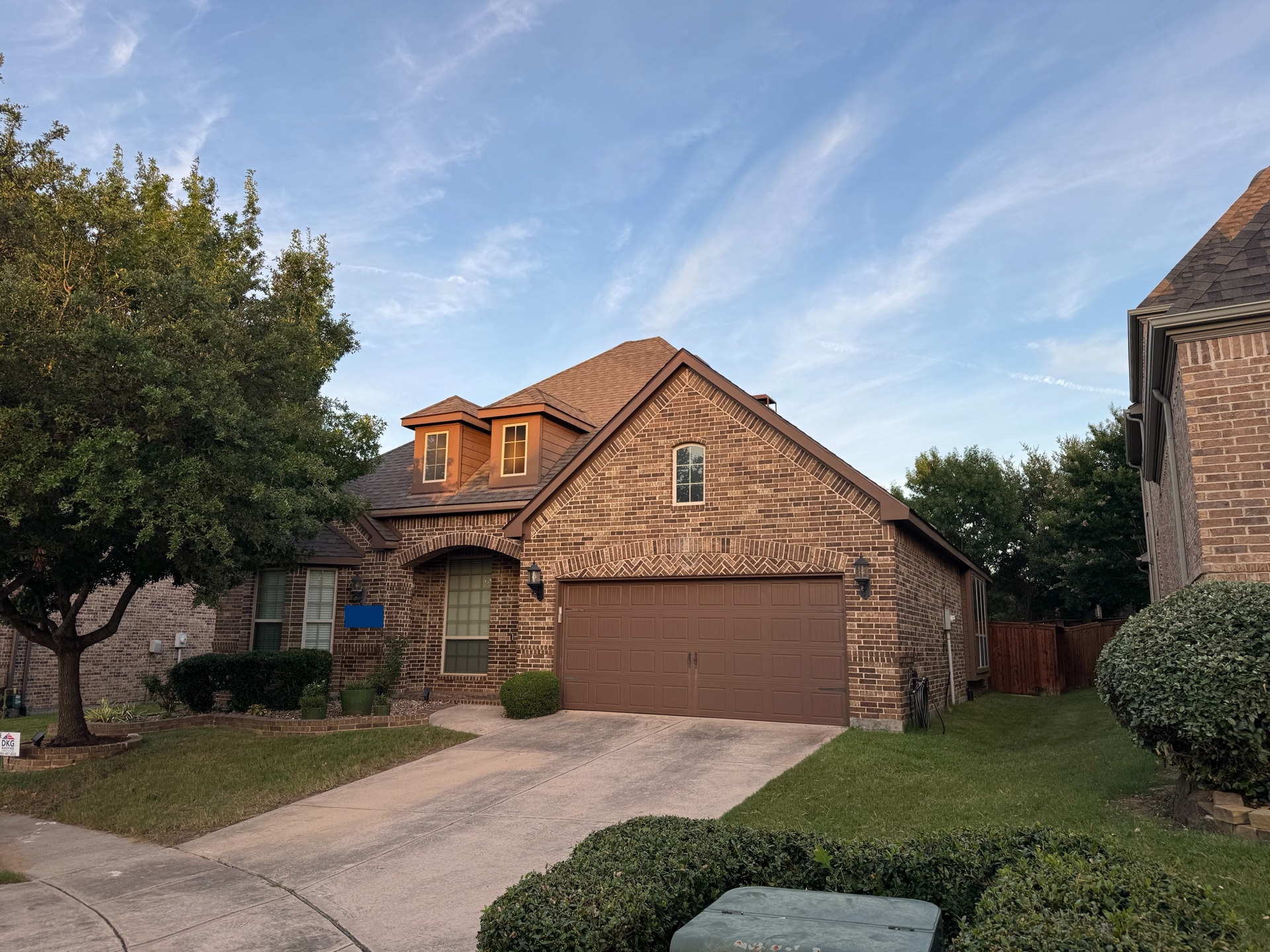
North Texas weather is notoriously hard on residential and commercial roofs. Between the golf-ball-sized hail in the spring and the unrelenting 100-degree heat in the summer, your roofing system is under constant stress. For homeowners in Denton County and across the DFW Metroplex, identifying the early signs of roof damage is the difference between a simple repair and a catastrophic interior leak.
At DKG Roofing, we roof North Texas homes, navigating the unique challenges of the Texas climate. As a veteran-owned company, we believe in providing straight answers about the condition of your home. Understanding what to look for—and knowing when to call in a professional—can save you thousands of dollars in long-term property damage.
Visible Exterior Shingle Damage
The most common indicator of a problem is visible physical damage to your shingles. After a storm, many homeowners search for missing shingles, but damage isn't always that obvious. Hail impact often leaves 'bruises'—dark spots where the protective granules have been knocked away, exposing the fragile asphalt mat underneath. These spots may feel soft to the touch, similar to a bruise on an apple.
Wind damage often manifests as lifted or creased shingles. In the DFW area, high-velocity straight-line winds can break the sealant strip of a shingle. Even if the shingle didn't blow off the roof, if the seal is broken, it can no longer protect your home from wind-driven rain. If you notice shingles that appear to be 'shingle-flipping' or flapping in the breeze, you need a professional roof inspection immediately to prevent water intrusion.
- Dark, circular indentations on shingles (hail bruises).
- Cracked or split wood shakes.
- Dents in metal valley flashing or soft metal vents.
- Granules accumulating in your gutters or at the base of downspouts.
Interior Indicators of a Leaking Roof
Sometimes the signs of roof damage are found inside the home before they are visible from the ground. Water is patient; it often travels along rafters or pipes before dripping onto your ceiling, meaning the leak might not be directly above the stain. If you see yellow, brown, or grey rings on your ceiling, your roof's integrity has already been compromised.
Don't ignore the attic. During the peak of summer or after a heavy North Texas downpour, check your attic for signs of daylight peeking through the roof boards or damp insulation. Wet insulation loses its R-value, leading to higher cooling costs during our hot summers. Addressing these roof repair services early can prevent the growth of toxic mold and wood rot in your home's structural framing.
- Water stains on ceilings or attic rafters.
- Peeling paint or wallpaper.
- Damp or moldy smells in the attic.
- Increased energy bills due to saturated insulation.
Flashing and Component Failures
A roof is more than just shingles; it is a complex system of flashings, vents, and underlayment. Damage often occurs at the 'penetrations'—anywhere something pokes through the roof or where the roof changes direction. Flashings are the metal pieces used to divert water away from these sensitive areas. In North Texas, the extreme expansion and contraction caused by temperature swings can cause flashing to pull away or sealant to crack.
Check your chimney and skylights frequently. If the metal looks warped or if the mortar is crumbling, water will find its way in. Many homeowners mistake flashing leaks for shingle failure, but these specific components require specialized attention during a storm damage assessment to ensure the entire system is watertight.
- Damaged or missing chimney cricket.
- Cracked caulking or sealant around pipe boots.
- Rusting or separated step flashing where the roof meets a wall.
- Rotted fascia boards or soffits.
Age-Related Deterioration
In Denton County, a roof rarely reaches its theoretical 30-year lifespan due to the intensity of the sun and frequency of storms. Heat is a major factor in roof degradation. UV rays bake the oils out of the asphalt shingles, making them brittle. Once a shingle loses its flexibility, it can no longer expand and contract with the weather, leading to cracks.
If your roof is over 15 years old and you start seeing 'bald' spots where granules are missing, the system is likely reaching the end of its functional life. While it may not be leaking yet, a brittle roof is highly susceptible to wind and hail damage. We recommend being proactive with replacements to avoid the stress of an emergency leak during a midnight thunderstorm.
- The 'rule of thumb' for Texas roofs is 15-20 years for asphalt shingles.
- Persistent granule loss throughout the entire gutter system.
- Widespread curling or 'cupping' of shingle edges.